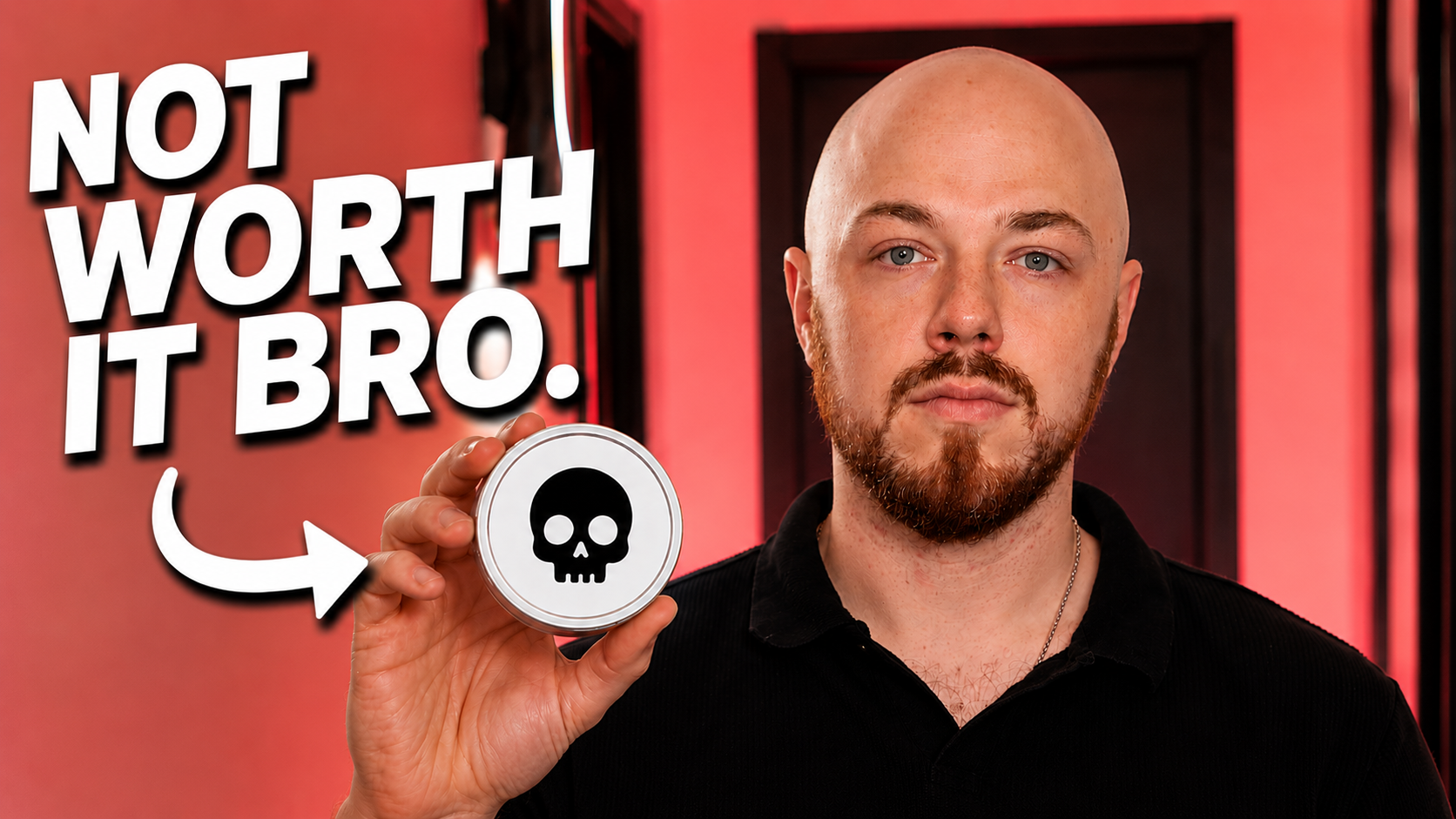
Nicotine pouches are marketed as the “clean” nicotine option. No smoke. No vapor. No tobacco. Just a small white pouch that sits in your lip and gives you a hit without the mess.
I used them every single day for four years. On heavy work days I went through an entire container. And after quitting, I realized something most users never get to see: what nicotine pouches are actually doing to your body, your mood, and your performance is significantly worse than what the marketing suggests.
This is the honest breakdown. The five real effects of long-term pouch use, the science behind each one, and the specific protocol I used to quit after four years on them.
What Are Nicotine Pouches?
Table of Contents
A nicotine pouch is a small, tobacco-free pouch containing synthetic nicotine, flavorings, sweeteners, and a fiber base. The user places the pouch between the lip and gum, where the nicotine is absorbed directly into the bloodstream through the oral tissue.
Brands like Zyn, On!, Velo, and Lucy dominate the market. They’re typically sold in strengths ranging from 2mg to 12mg per pouch, with the higher dosages being the most popular among heavy users.
Pouches gained mass popularity because they offered a smoke-free, vapor-free way to deliver nicotine. The marketing has positioned them as the cleaner alternative to cigarettes, vapes, and dip. That framing is technically true and also incomplete in ways that matter a lot.
Are Nicotine Pouches Safe?
The short answer: nicotine pouches are less harmful than cigarettes but they are not harmless. They cause measurable damage across at least five physiological systems with regular long-term use.
The marketing focuses on what pouches don’t do (no smoke, no lung damage, no tobacco). What it skips is what they do do: gum recession, gut microbiome disruption, cardiovascular constriction, mood instability, and dependency that’s harder to break than most users realize.
Below is the breakdown of each, based on my own experience after four years of daily use and the research I did during and after quitting.
The 5 Real Effects of Long-Term Nicotine Pouch Use
1. Mood Instability and Mental Health Impact
This is the effect most users never connect to the pouches because it builds so gradually.
Nicotine creates a short cycle of stimulation followed by withdrawal. Every pouch produces a small spike, then a small crash. When you’re using them all day, every day, you live inside that cycle. The result is constant low-grade mood fluctuation that feels normal because you’ve never lived without it.
After quitting, the most noticeable change for most long-term users is mood stability. The same baseline holds from morning to evening without artificial peaks or troughs. For anyone whose work requires consistent focus, decision-making, or emotional regulation (operators, founders, parents, anyone with high-stakes responsibilities), this difference is significant.
A stable baseline is the foundation of high performance. Pouches actively undermine it.
2. Gut Microbiome Disruption
Long-term nicotine use disrupts the gut microbiome over time. The damage accumulates quietly and isn’t usually noticed during use because it never has a sharp onset.
After stopping pouches, most users report it takes between four and eight weeks for gut function to fully normalize. In my case, it was about two months before I felt completely reset.
The mechanism involves both the nicotine itself and the artificial sweeteners and flavorings in the pouch base. Combined, they alter the bacterial balance in the digestive tract over years of exposure.
3. Cardiovascular and Vascular Damage
Nicotine is a known vasoconstrictor. It narrows blood vessels throughout the body, reducing blood flow to extremities and tissues.
For long-term users, this constriction becomes the new normal. The body adapts to operating with reduced circulation. Once you stop, blood flow gradually returns to baseline, which often produces noticeable improvements in skin tone, energy in the limbs, and overall vascular health.
For men specifically, restricted blood flow from chronic nicotine use can affect sexual function over time. The longer the use, the more pronounced the effect.
4. Gum and Oral Tissue Irritation
The pouch sits in direct contact with the gum tissue for hours at a time, often daily, for years. The combination of nicotine, synthetic sweeteners, and flavorings irritates the gum tissue continuously.
Long-term users often develop gum recession, white patches at the pouch site (a condition called leukoplakia), and increased sensitivity. Some of this is reversible after quitting. Some of it isn’t.
This is the most visible damage but the one users tend to discount because it’s not life-threatening. It’s still real and worth taking seriously.
5. The Focus and Testosterone Argument Doesn’t Hold Up
There’s a corner of online discourse that promotes nicotine as a focus enhancer and testosterone booster. The argument typically goes: nicotine sharpens cognition, increases dopamine, and produces small hormonal benefits.
Parts of this are technically accurate. Nicotine does increase short-term focus. It does produce small dopamine effects. Cigars (which deliver nicotine differently) have been associated with very small testosterone bumps.
But the math doesn’t work for daily users. You’re trading consistent all-day cognition for short artificial bursts of sharpness, while accumulating documented damage across mood, gut, cardiovascular, and oral health. The “focus” upside is real for the first thirty minutes after a pouch. The downsides compound for years.
For operators trying to perform at a high level, a stable, drug-free baseline outperforms a nicotine-modulated one every single time. I built every business I have without pouches. The pouches were an addition I rationalized, not a tool I needed.
How to Quit Nicotine Pouches (The Protocol That Actually Works)
Most quit attempts fail. The reason is almost never willpower. It’s that people try to subtract a substance without understanding the mechanic that drives relapse.
Here is the protocol that works.
Step 1: Stop Completely. Don’t Taper.
Tapering off nicotine pouches sounds reasonable but usually fails. The reason is that tapering keeps the dependency loop active. Every reduced dose still reinforces the same neural pathway. The cravings never fully reset because the substance is still in the system.
The cleaner approach is to stop entirely on a chosen day. The first two weeks are uncomfortable but not catastrophic. By week three, the physical cravings have significantly diminished. By week six, they’re mostly background noise.
Step 2: Fill the Vacuum Immediately
This is the most important step and the one most quit attempts skip.
Nicotine pouches occupy specific moments in your day. Morning coffee. Mid-morning work block. After meals. Before bed. When you remove the pouches, those moments become empty slots that the brain demands be filled. If you don’t deliberately fill them, the old behavior comes back automatically.
The mechanic that matters: subtract and replace, not just subtract.
What to replace pouches with:
- Physical movement. Walking, gym sessions, push-ups, anything that occupies the body during the moments you’d normally reach for a pouch
- Hydration rituals. Coffee, tea, sparkling water, something to hold and sip during the trigger moments
- Breathing protocols. Four to six deep breaths during a craving usually resolves it within 90 seconds
- A specific replacement behavior at each trigger moment. Map out your top three to five “pouch moments” and assign each one a specific replacement action
The replacement behaviors should be chosen before quit day, not invented on the fly. Pre-decided replacements work. Spontaneous ones rarely do.
Step 3: Restructure Your Environment
Throw out every pouch and accessory before quit day. Don’t keep “emergency” supplies. The presence of pouches anywhere accessible significantly increases relapse risk in the first two weeks.
Tell two or three people you trust that you’re quitting. The accountability isn’t about shame. It’s about making relapse a slightly more visible event, which adds friction in the right direction.
Avoid the specific contexts where you used pouches most intensively for the first week if possible. Most relapses happen in the contexts that were most associated with the substance.
Step 4: Track the First 90 Days
The first two weeks are physical. The next ten weeks are about cementing the replacement behaviors as new defaults. By day 90, the new pattern is largely automatic and the risk of relapse drops significantly.
Most users who make it to 90 days successfully don’t go back. Most users who relapse do so in the first 30 days, typically because they didn’t fill the vacuum and the old behavior resurfaced when stress increased.
How Long Does It Take to Recover from Nicotine Pouches?
Different systems recover on different timelines.
- Mood stability: Noticeable improvement within 2 to 4 weeks
- Gut function: 4 to 8 weeks for full reset
- Cardiovascular function: Initial improvements within weeks, full recovery over months
- Gum tissue: Visible improvements within 4 to 6 weeks; full recovery depends on extent of prior damage
- Sleep quality: Often disrupted in the first week, then improves significantly by week 3
The full recovery arc for a multi-year user is generally complete within 3 to 6 months of quitting.
Frequently Asked Questions About Nicotine Pouches
Are nicotine pouches worse than cigarettes?
Nicotine pouches are generally considered less harmful than cigarettes because they don’t involve combustion, smoke inhalation, or tar exposure to the lungs. However, they are not harmless. Pouches still deliver high doses of nicotine, which is itself addictive and cardiovascular-damaging, and they cause measurable harm to gum tissue, gut function, and mood stability with long-term use.
Are nicotine pouches addictive?
Yes. Nicotine pouches deliver nicotine directly into the bloodstream through the oral tissue, often at higher and more sustained doses than cigarettes. This creates strong physical and psychological dependency. Many long-term pouch users report that pouches are harder to quit than cigarettes because they can be used continuously throughout the day without social or environmental restrictions.
Do nicotine pouches cause cancer?
The long-term cancer risk from nicotine pouches is still being studied because pouches are relatively new on the mass market. Pouches don’t contain tobacco and don’t involve combustion, which removes two major cancer drivers associated with cigarettes. However, the synthetic nicotine, sweeteners, and flavorings in pouches sit in direct contact with oral tissue for hours daily, which is a documented risk factor for oral lesions, leukoplakia, and gum disease.
How much nicotine is in a pouch?
Most nicotine pouches range from 2mg to 12mg of nicotine per pouch. The most popular strengths among heavy users are typically in the 6mg to 12mg range. For comparison, the average cigarette delivers about 1mg of absorbed nicotine. A single 12mg pouch can deliver more nicotine to the bloodstream than several cigarettes.
Do nicotine pouches stain your teeth?
Standard nicotine pouches do not stain teeth the way cigarettes or chewing tobacco do because they don’t contain tobacco leaf and don’t produce tar. However, the synthetic sweeteners and flavorings in many pouches can contribute to enamel erosion over time, and the gum recession caused by long-term use can expose the darker root surfaces of teeth.
How long does nicotine from a pouch stay in your system?
Nicotine itself is metabolized fairly quickly. The half-life is approximately 2 hours, meaning most of a single dose is cleared within 8 to 10 hours. Cotinine, the main metabolite of nicotine, has a half-life of around 16 hours and can be detected in urine for 3 to 4 days after use. For long-term daily users, full nicotine clearance from the body typically takes 3 to 4 weeks after quitting.
What are the withdrawal symptoms from quitting nicotine pouches?
Common withdrawal symptoms in the first 2 weeks include irritability, difficulty concentrating, increased appetite, mild anxiety, disrupted sleep, headaches, and strong cravings. Symptoms typically peak between days 3 and 7, then significantly decline by week 3. Most physical withdrawal is resolved by week 4. Psychological cravings can persist longer but become much less intense after the first 30 days.
Can you quit nicotine pouches cold turkey?
Yes, and for most users this is actually the most effective approach. Tapering keeps the dependency loop active and often prolongs the quitting process without reducing the difficulty. Cold-turkey quitting produces sharper short-term discomfort but typically leads to faster full recovery. The key is to combine stopping completely with deliberately filling the time and rituals that pouches previously occupied.
Are nicotine pouches bad for your gums?
Yes. Long-term pouch use causes gum recession, irritation, and in some users white patches at the pouch placement site (leukoplakia). The continuous direct contact between the pouch and gum tissue, combined with the chemical composition of the pouch contents, damages oral tissue over time. Some of this damage is reversible after quitting. Some, particularly gum recession, is not fully reversible.
Do nicotine pouches affect testosterone?
There is no strong evidence that nicotine pouches meaningfully increase testosterone. Some research has shown very small short-term hormonal effects from certain forms of nicotine (such as cigars), but these effects are minor and don’t outweigh the documented cardiovascular and metabolic costs of regular use. For most users, the long-term effect of daily nicotine use on overall hormonal health is negative, not positive, primarily because of impacts on sleep quality, stress regulation, and vascular function.
The Bigger Frame
I work with clients across the world who are running real businesses and optimizing every visible part of their lives. Most of them think carefully about their content strategy, their offer structure, their team, their financial systems. Almost none of them apply the same level of thinking to what they put in their body every day.
The body is infrastructure. So is the mind. Anything that destabilizes either one is a leak in the operating system that runs everything else.
Nicotine pouches are one of the most common leaks in the operator world right now. The marketing is good. The dependency is real. The damage is documented but downplayed. And the upgrade you get from quitting is significantly larger than most users realize because they’ve forgotten what their baseline used to feel like.
If you’ve been thinking about quitting, the version of you off pouches is sharper, steadier, and more capable than the version on them. Not the artificial-sharpness kind. The real, all-day, compounding kind.
The biggest upgrades aren’t always the things you add to your life. Sometimes they’re the things you finally stop doing.
Always the best,
Dylan Madden
If this was useful and you want more practical breakdowns on operator health, business systems, and building a life that compounds in the right direction, subscribe to my Substack. New essays go out weekly.
The weekly letter
Build income. Live with options.
Get my direct notes on money, business, living abroad, and becoming the person capable of building a freer life.
Join the newsletter